13 September 2026
Peñafrancia Regatta Lagonoy Marks 30 Years
The Peñafrancia Regatta at Lagonoy North turned 30 this year, with sea and river processions on September 9 and 11, spanning five mayors' terms in all.
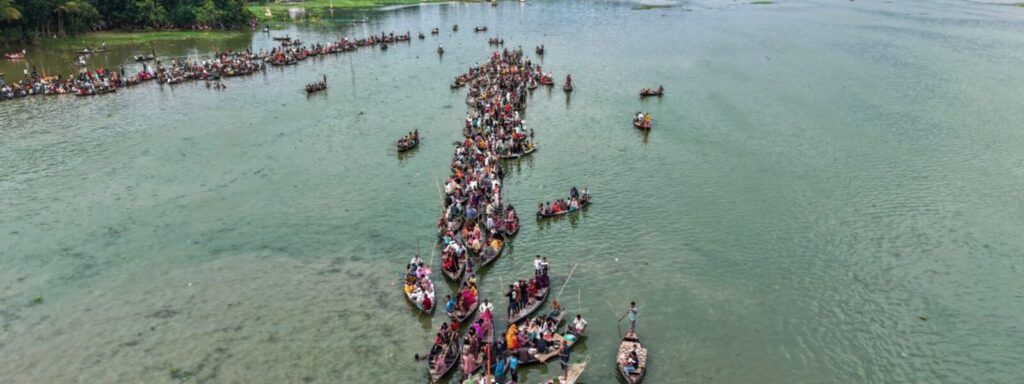
The Peñafrancia Regatta at Lagonoy North turned thirty this year, and the anniversary edition ran from September 9 to 11 in Camarines Sur. Two processions carried images of Nuestra Señora de Peñafrancia and the Divino Rostro through a town where the celebration has now outlasted five local administrations.
One moved over the sea. The other moved along the river. Both ended at the same barangay, and between them sat three days of boat races, sport and civic programs that have grown around the devotion since 1996.
What happened between September 9 and 11?
The maritime procession of the Roman Catholic church took place on September 9. The fluvial procession of the Aglipay church followed on September 11. Barangay Balaton sat at the center of both, and it’s the barangay where the churches of the town’s two major religions stand.
That’s the unusual part. A single devotion, two congregations, two dates, one geography. The Peñafrancia Regatta is the frame that holds them together rather than a single parish event with a guest list.
Why does one town run two processions?
Balaton is home to both the Roman Catholic parish and the Iglesia Filipina Independiente, known locally as the Aglipay church. The patroness of the Catholic parish is Nuestra Señora Virgen de Peñafrancia, the same figure the wider region honors as Ina, Patroness of Bicolandia.
The two words aren’t interchangeable, and the distinction is doing real work here. A maritime procession moves over open sea. A fluvial one moves along a river. Lagonoy North has both kinds of water, which is why the celebration can put the same devotion on two different surfaces two days apart without either one being a stand-in for the other.
So the two processions aren’t competing observances. They are two communities marking the same devotion on consecutive dates, using the water each has access to.
Who started the Peñafrancia Regatta?
According to Ariel O. Nitullano, the municipal tourism officer designate, the regatta in northern Lagonoy was initiated by the Aglipay church in 1996 as a local solemn celebration for Ina. It began as a church observance, not as a tourism program.
The local government joined afterward. That happened under then mayor and bokal Ferdinand “Mamo” B. Melgarejo, together with the parish of Nuestra Señora de Peñafrancia in Balaton. What followed was a working arrangement between the municipal government, the two churches, barangay officials, schools and the private sector, and it’s that arrangement, rather than any single office, that has carried the Peñafrancia Regatta for three decades.
Thirty years, five mayors
The celebration has run through five local executives in Lagonoy. The most recent is the current mayor, Dyego Luiz H. Pilapil.
That detail’s worth more than it looks. Local festivals usually track the enthusiasm of whoever is in office, and they thin out once attention moves elsewhere. If a festival can’t survive a handover, it usually doesn’t. A regatta that survives five turnovers is being carried by the parishes and the barangays, not by an administration.
Who led the rites this year?
The main celebrant at the Holy Mass on September 9 was Most Rev. Jose Rojas Jr., DD, of the Diocese of Libmanan. The fluvial procession on September 11 was led by Rt. Rev. Arnold M. Damayan, bishop of the Diocese of Maquebaca.
Two bishops, two days, two churches. For a municipal celebration in a coastal town, that’s a considerable amount of ecclesiastical weight in one week.
What filled the days in between
The program around the Peñafrancia Regatta ran wide. It opened with the crowning of Bb. Lagonoy North Peñafrancia Regatta 2026 and carried a set of water events built for the setting: Boxing sa Dagat, a 2-Men and Women Sibid competition, a motorboat race and a 10-Men Casco race.
Laro ng Lahi ran alongside those. So did a volleyball tournament, an inter-barangay basketball tournament, a zumba session folded into the Civil Service Month celebration, an amateur singing contest, a parade of municipal and barangay officials, and a fireworks display.
Read the list and the economic argument makes itself. Three days of competition and programs keeps visitors in town across meals and overnight stays, which is a different proposition from a crowd that arrives for a procession and leaves the same afternoon.
The water events also say something about who the program is built for. Boxing sa Dagat, a sibid competition and a casco race aren’t spectator imports dropped into a coastal town. They’re built out of what people there already do with boats and open water, which is why they’ve lasted alongside the processions instead of rotating out every few years.
Will a road change how many people come?
Nitullano expects the thousands of devotees who come each year to increase once the circumferential road is finished. That road would connect the coastal barangays of Lagonoy North and the town of Garchitorena to the mainland of the Partido Area.
Mayor Pilapil also pointed to newly identified white sand beaches, waterfalls and uncleared forest in Lagonoy North, and said he hopes these become destinations in their own right. Tourism promotion is among his stated priorities.
Both statements are expectations about what a road and a set of sites might do. Neither is an attendance measurement, and the difference matters when the Peñafrancia Regatta is being discussed as an economic driver rather than a devotion.
What the record doesn’t establish
The account gives no attendance figure for this year or any previous year. Thirty years of growth is described, not counted.
There’s no completion date for the circumferential road, no cost, and no implementing agency named. There are no budget figures for the celebration, no revenue estimate for the town, and no occupancy data from the three days.
The newly identified beaches, waterfalls and forest areas are named as discoveries without locations, access routes or any assessment of what visitor traffic would require of them. Anyone treating the Peñafrancia Regatta as a tourism case study is working from intention rather than evidence, and that isn’t the same thing, and the gap is worth stating plainly rather than filling in.
What to watch over the next year
Three things would turn the stated expectations into something measurable. The first is the circumferential road. A completion date, a funding source and an implementing agency would move it from an aspiration to a project with a schedule attached.
The second is a count. Thirty years of the Peñafrancia Regatta have produced no published attendance figure, so nobody can say whether crowds are growing, flat or shrinking. You can’t manage what was never counted. A single year of gate or barangay counts would give the thirty first year something to compare against.
The third is what happens to the newly identified sites. Beaches, waterfalls and uncleared forest attract visitors before they attract facilities, and the order those arrive in usually decides whether a place holds up. It’s the difference between a destination and a crowded afternoon. A site list with access routes and carrying capacity would say more about Lagonoy North’s tourism prospects than another year of the same projection.
None of that takes anything away from the celebration. The Peñafrancia Regatta has already done the hard part, which is to exist for thirty years without a budget line big enough to guarantee it.
What the thirtieth year actually shows
Strip out the projections and a clear record remains. A church observance begun in 1996 has run for thirty consecutive years, drawn in a second congregation, survived five changes of local leadership, and built a three day civic program around two processions.
The Peñafrancia Regatta isn’t waiting on a road to justify itself. It already functions as the calendar anchor for Lagonoy North, and whatever the circumferential road does to visitor numbers, the thirty year run is the part that is documented.
Source: original report, published September 12, 2026.
Source Bicolmail Newspaper, reported 12 September 2026. Written from the original report.
Published 13 September 2026. Every figure on this site carries its source and the date it was read. Where our data comes from. Something wrong here?